SPEE3D Joint-Force Partners Use Cold Spray to Produce Parts at Sea
In the first at-sea deployment of a SPEE3D system, a US joint-branch effort took cold spray metal manufacturing aboard Canadian partner vessel MV Asterix, producing mission-critical metal parts for participating forces across a distributed network reaching from ship to shore.
For a ship or forward unit in the Pacific, a part that isn’t on hand is an ocean and several months away, and across the vast distances of the Indo-Pacific, supply lines are long, slow, and, in a contested environment, vulnerable. This means a single missing component can take a vehicle, a weapon, or a vessel off the line and keep it there.
At RIMPAC 2026, SPEE3D US defense partners: the Consortium for Advanced Manufacturing Research and Education (CAMRE) at the Naval Postgraduate School (NPS), with the US Army Combat Capability Development Command Army Research Laboratory (ARL) as its government lead, alongside the Tennessee Army National Guard and the University of Tennessee Knoxville (UTK) Defense Development and Applied Research Center (DARC), set out to close that gap: not from a depot, but from the deck of a ship at sea.
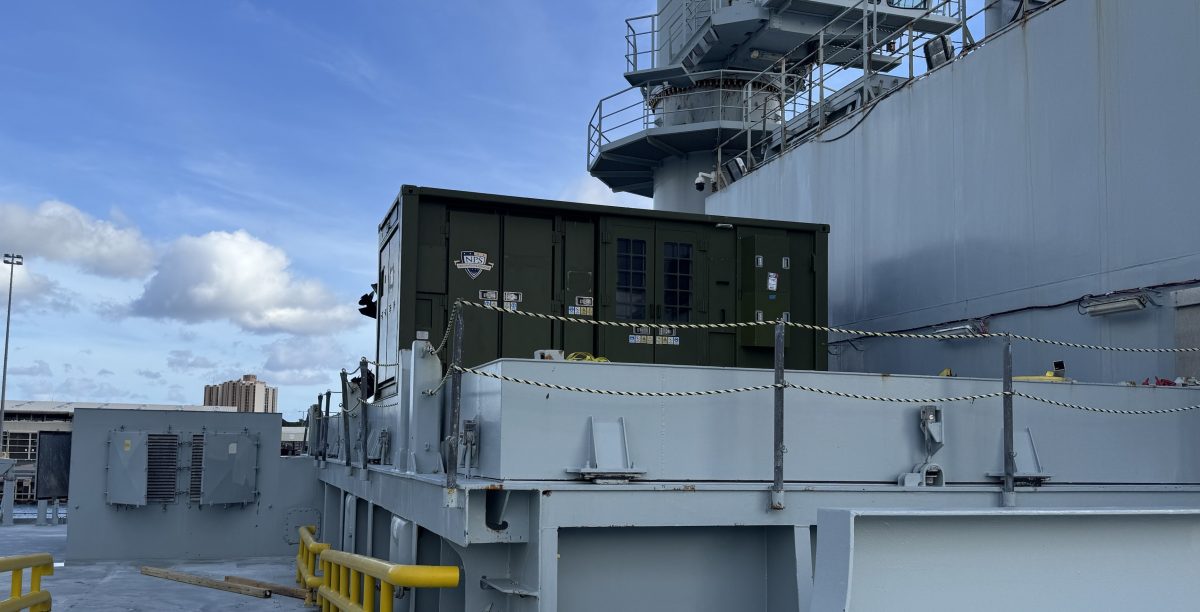
CAMRE NPS XSPEE3D on MV Asterix ready to disembark for RIMPAC 2026CAMRE NPS XSPEE3D crane-lifted onto the MV Asterix for RIMPAC 2026CAMRE NPS XSPEE3D and SPEE3Dcell crane-lifted onto the MV Asterix for RIMPAC 2026
Working through a Partnership Intermediary Agreement with FLEETWERX, CAMRE deployed more than 50 advanced manufacturing technologies across the exercise, designed to deliver mission-critical readiness parts in days rather than months. As one of the technologies chosen, SPEE3D’s expeditionary capability, the Expeditionary Manufacturing Unit (EMU), operated aboard the MV Asterix while underway, putting production at the point of need rather than at the end of a supply chain.
During RIMPAC 2026, SPEE3D cold spray systems printed 32 mission-critical metal parts for participating forces through a distributed manufacturing network spanning ship and shore. Twenty-four were printed through the global reachback capability of the Knoxville Armory, and eight at sea aboard the MV Asterix using SPEE3D’s EMU system. Twenty-nine of the 32 were taken through to full completion, including heat treatment and machining.
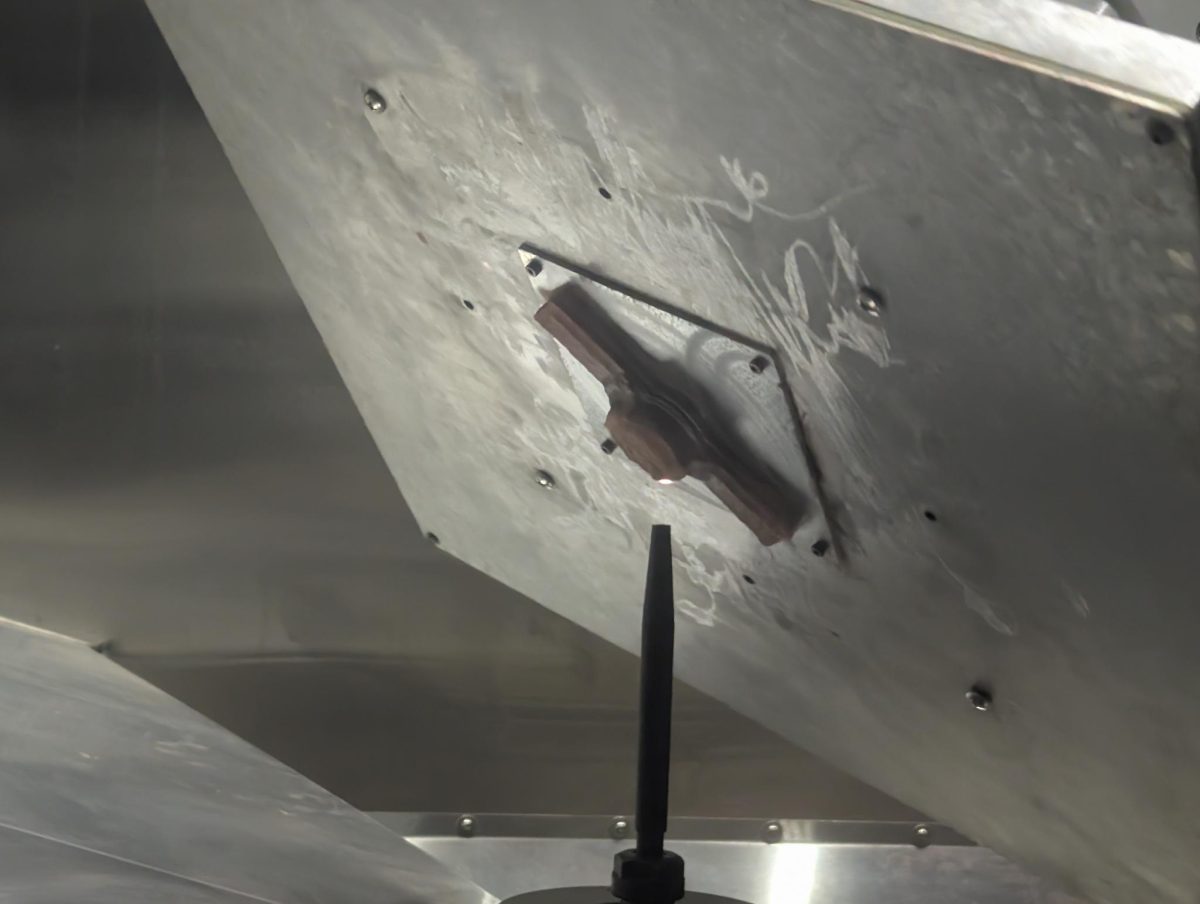
An Aluminium Bronze Cover Box printed and machined using the UTK DARC & TNARNG SPEE3D Expeditionary Manufacturing Unit (EMU) reach back capabilityThe Aluminium Bronze Cover Box installed on the MV Asterix during RIMPAC 2026, an exercise organised by CAMRE NPS.
“The ability to produce, post-process, and evaluate parts while operating at sea has direct implications for readiness and sustainment. This effort brings together government, academia, industry, and operational partners to test advanced manufacturing where it matters most, in the hands of the warfighter.”
LtCol., USMC (Ret.) Chris Curran, Program Manager at CAMRE NPS.
SPEE3D’s capability runs on Cold Spray Manufacturing (CSM), which deposits metal powder at supersonic speed to build dense metal parts without melting, making it rugged and compact enough to work in the field and at sea. The EMU pairs the containerised XSPEE3D metal 3D printer with an integrated SPEE3Dcell post-processing and machining unit, so a part can go from print to finished component without leaving the ship.
The test was simple, and until recently would have been considered out of reach: prove that critical spares can be produced from metal powder, on-site and underway, keeping ships and forces operational when the supply chain cannot reach them.
Aluminium Bronze Hatch Knob printed with CAMRE NPS XSPEE3D on the MV Asterix at RIMPAC 2026CAMRE NPS and TNARNG manufacture Aluminium Bronze Hatch Knob on MV Asterix
“At RIMPAC 2026 we deployed our Expeditionary Manufacturing Unit at sea for the first time, printing mission-critical metal parts on an open deck in heavy seas aboard the MV Asterix, alongside the US Navy and the Royal Canadian Navy. That is what it means to bring production to the fight. Across our deployments, we have now proven Cold Spray Manufacturing in sub-zero, tropical, battle-damage and at-sea conditions, the proof that SPEE3D works where supply chains fail. We’re proud to have supported our partners in putting this to the test in one of the most demanding environments there is.”
Byron Kennedy, CEO of SPEE3D.
“Producing parts at sea on NATO vessels using coalition equipment is an example of the flexibility and interoperability that are key to modern operations. RIMPAC offers a unique opportunity to bring innovative advanced manufacturing capabilities out of the lab and test them in a realistic maritime environment.”
Morgan Bower, FLEETWERX Hub Director.
On the evidence of RIMPAC 2026, readiness no longer needs to be hostage to distance, and making a part on demand, wherever the mission takes you, moves closer to being a standard part of how the Joint Force and its allies operate.
CAMRE NPS Expeditionary Manufacturing Unit (EMU) embarked at sea and printing replacement parts on the MV Asterix.
RIMPAC 2026, the 30th iteration of the world’s largest international maritime exercise, ran in and around the Hawaiian Islands from 24 June to 31 July 2026, bringing together dozens of allied and partner nations, 40 surface ships, five submarines, 140 aircraft, and more than 25,000 personnel.
Informazioni sul Consorzio per la ricerca e l'istruzione sulla produzione avanzata presso la Naval Postgraduate School (CAMRE NPS)
The Consortium for Advanced Manufacturing Research and Education (CAMRE) at the Naval Postgraduate School (NPS) is operationalizing advanced manufacturing for the Joint Force. As a thought leader in transitioning research and education into warfighter capabilities, CAMRE achieves this by: Addressing immediate needs of service members during operational exercises and deployments using advanced manufacturing; Building networks of capabilities among military, government, academic, commercial, and allied partners; Pioneering tactics, techniques, and procedures (TTPs) to efficiently transform advanced manufacturing into combat power. https://nps.edu/web/camre
Informazioni su FLEETWERX
FLEETWERX funge da intermediario fondamentale per collegare la Naval Postgraduate School con l'industria, il mondo accademico e il governo. Per Trident Warrior, FLEETWERX cerca di portare i partner della difesa non tradizionali in contesti militari reali e rilevanti, consentendo loro di testare le soluzioni direttamente con gli utenti finali e di accelerarne il perfezionamento e l'adozione. https://www.fleetwerx.org/
Informazioni sull'Università del Tennessee Knoxville
L'Università del Tennessee, Knoxville, è l'istituzione di ricerca pubblica più importante dello Stato e un partner leader per il governo e l'industria nella produzione avanzata, nella ricerca sulla difesa e nell'istruzione ingegneristica. Attraverso centri come il Defense Development and Applied Research Center (DARC), l'UTK collabora con le agenzie federali, l'industria della difesa e altri partner accademici per sviluppare, testare e trasferire nuove tecnologie che rafforzano la sicurezza nazionale e costruiscono la capacità della forza lavoro. https://www.utk.edu/
About DEVCOM Army Research Laboratory
DEVCOM ARL is the Army’s sole fundamental research laboratory serving as the nexus of science between the military, academia and industry. Operating under U.S. Army Futures and Concepts Command and the U.S. Army Transformation and Training Command, ARL executes globally recognized research to accelerate delivery of war-winning, disruptive technologies for tomorrow’s Army. For information visit: https://arl.devcom.army.mil
Informazioni su SPEE3D
SPEE3D is a leading provider of expeditionary metal manufacturing technology and the pioneer of Cold Spray Manufacturing (CSM), a deployable approach to metal part production that builds components at high speed without melting. SPEE3D systems enable organisations to manufacture metal parts closer to the point of need, helping improve readiness, reduce supply chain risk, and support mission-critical operations. With operations in Australia, the United States and the United Kingdom, SPEE3D works with militaries and partners to make on-demand manufacturing a practical reality in the field. https://www.spee3d.com