Case studies
Learn what we’ve done, how we’ve done it, and how it helped our customers succeed.
University of Tennessee, Knoxville (DARC), Tennessee Army National Guard & DEVCOM Applied Research Laboratory
Critical assets restored in under 24 hours with Cold Spray Manufacturing and drone delivery
Challenge
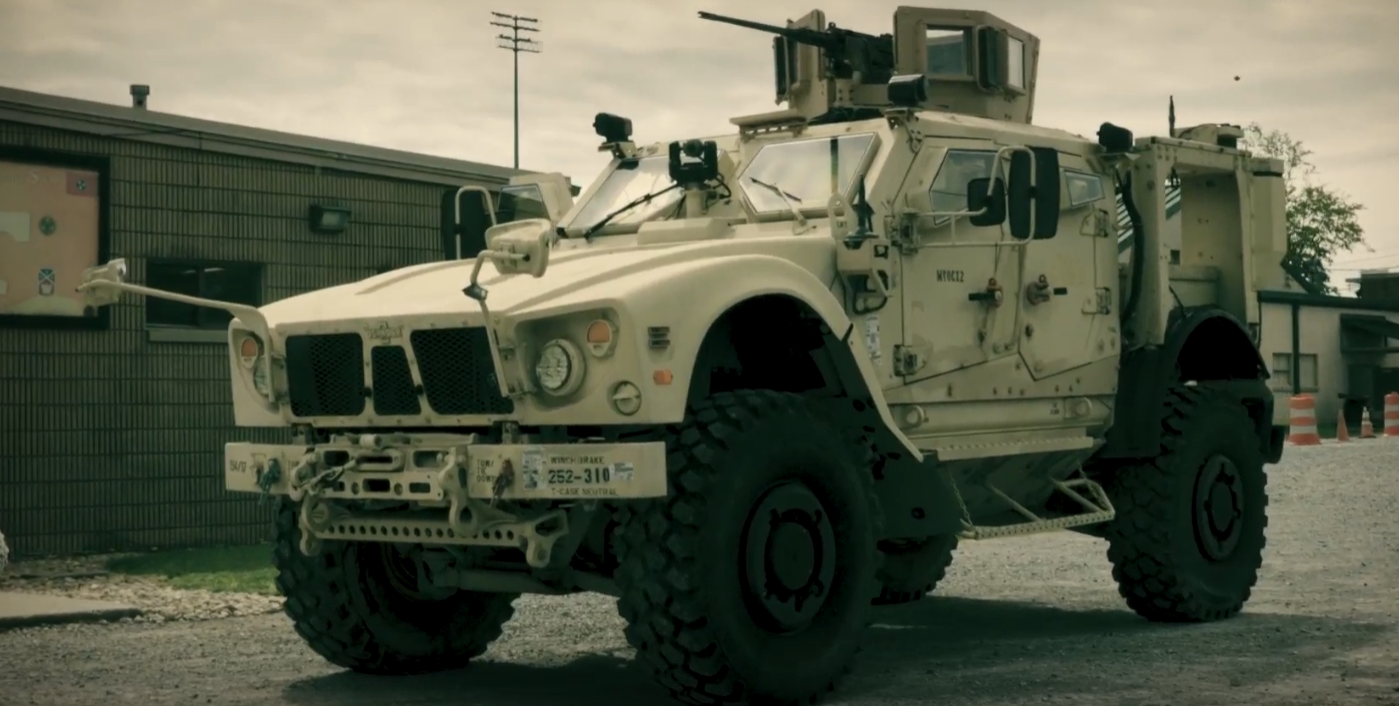
Recognising the need for greater agility in military sustainment, the U.S. Secretary of War has directed the expansion of advanced manufacturing within operational units by 2026. This challenge was met on a Tennessee training range, in a scenario that mirrors real Tennessee Army National Guard experiences: could a critical part be designed, produced and delivered fast enough to restore a deadlined vehicle under realistic field conditions?
Solution
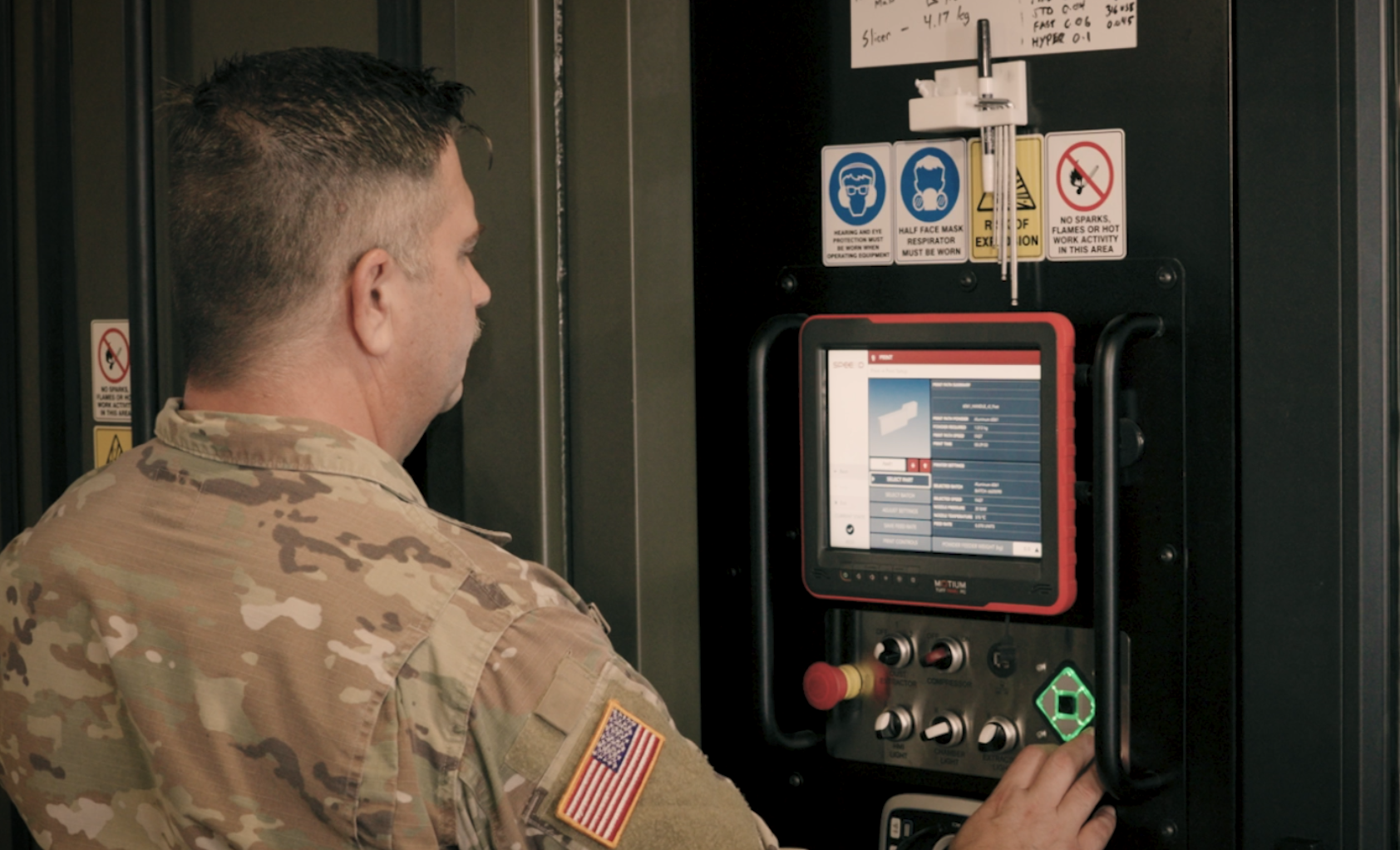
The University of Tennessee’s Defense Development and Applied Research Center (UTK DARC), the Tennessee Army National Guard (TNARNG), and DEVCOM Army Research Laboratory joined forces with SPEE3D to demonstrate expeditionary metal manufacturing at the forward edge. SPEE3D provided the Expeditionary Manufacturing Unit (EMU), combining the XSPEE3D metal 3D printer and SPEE3Dcell post-processing equipment, along with technical support and training.
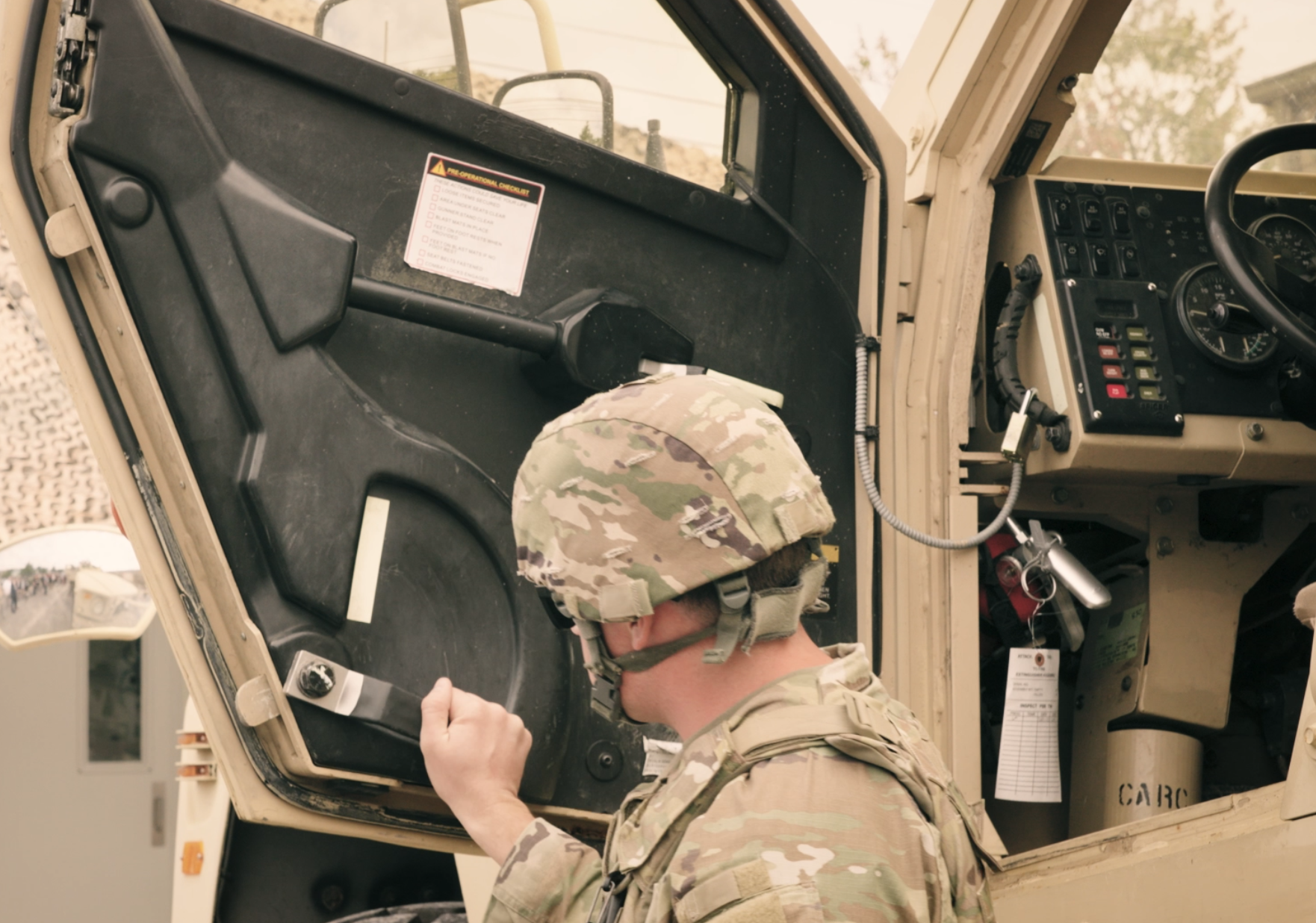
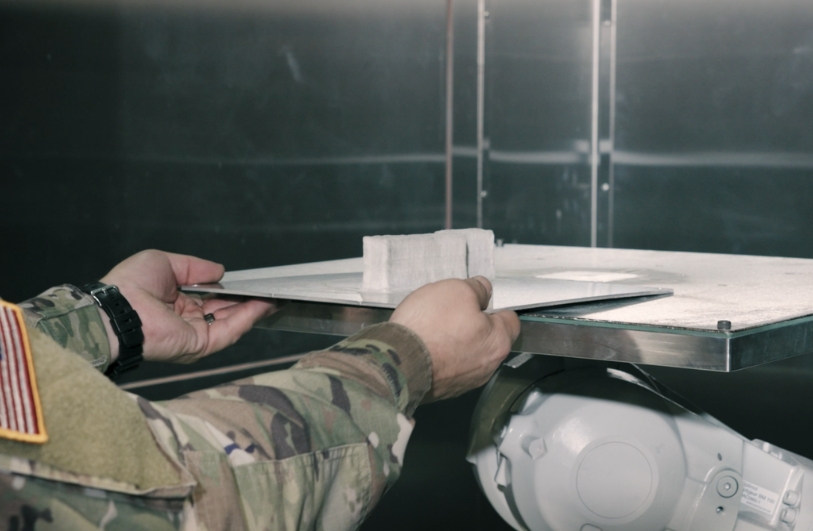
TNARNG soldiers used the EMU to design, print, heat-treat and machine a stainless-steel Battle Lock Handle in less than 10 hours. A drone then transported the part over remote, undrivable terrain directly to the stranded vehicle, where a soldier completed the repair on site, compressing a six-week logistics chain into a single-day mission.
Results
- Stainless-steel Battle Lock Handle designed, printed and installed in under 10 hours, overcoming a 6 to 10-week supply chain lead time.
- Drone delivery demonstrated as a viable last-mile logistics solution in contested terrain.
- Multiple survivability-critical components produced on demand, including a MEDEVAC generator cover and friendly-fire prevention mounting brackets.
- UTK DARC established as a leading training and research partner for expeditionary manufacturing readiness for the U.S. military.
- Participants with limited prior additive manufacturing exposure learned the full workflow and produced field-certified parts within the trial’s timeframe.
For more information, visit our news page or download the full case study.
“If we can give our Soldiers the ability to build critical repair parts in a timely manner that will help improve combat power, enhance readiness, and reduce risk and our logistics footprint, that could ultimately help save Soldiers’ lives.”
Army Lt. Col. Colby Tippens, Executive Officer, 278th ACR, Tennessee Army National Guard.