
News
Follow the headlines, read the stories, and enjoy the journey.
From Deadlined to Deployed: How SPEE3D Tech Helped Restore Critical US Army Defense Assets in Under 24 Hours
Our deployable cold spray metal additive manufacturing technology enabled the Tennessee Army National Guard, University of Tennessee, Knoxville (DARC), and DEVCOM Army Research Laboratory to demonstrate the rapid repair of a combat support vehicle and other critical assets during a live mission scenario, enhancing military readiness. In recognition of the project’s success, the team was awarded the prestigious Expeditionary & Tactical 3D Printing Excellence Award at MILAM 2026.
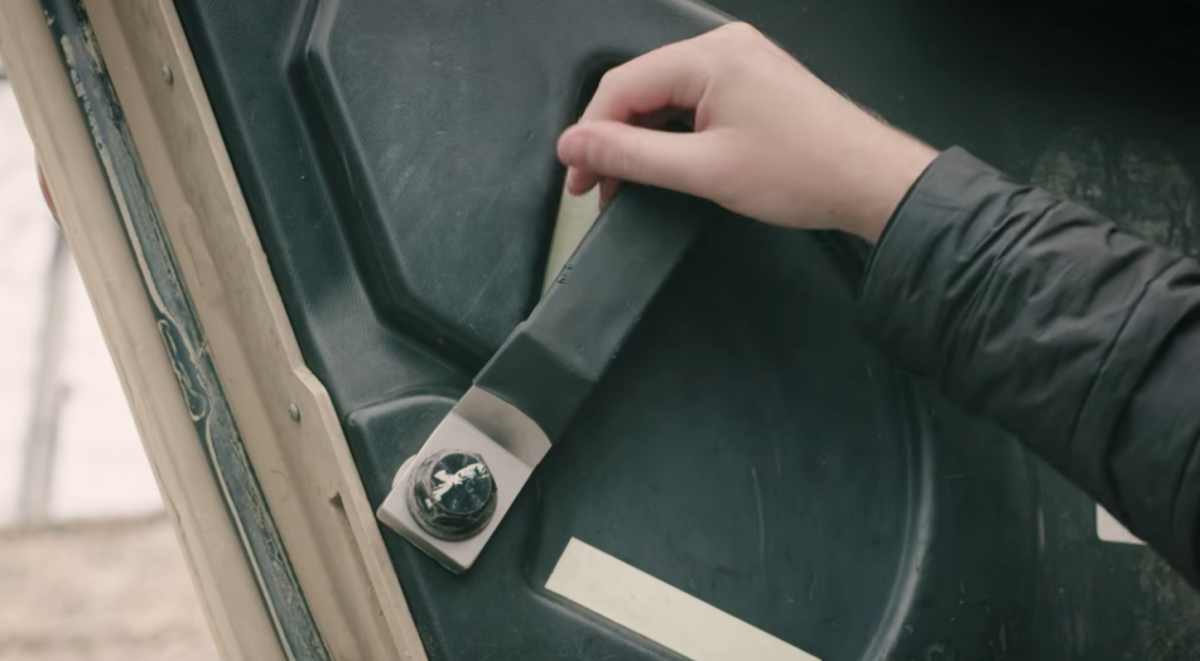
On a Tennessee training range, a critical combat support vehicle sat “deadlined” and effectively out of the fight. A failed Battle Lock Handle had disabled the armoured door’s locking mechanism, leaving it vulnerable to being forced open from the outside. Without a functioning handle, the vehicle could not safely return to base, leaving the crew at risk and the platform sidelined at the time it was needed most.
Across the U.S. Army, that scenario is a familiar logistics problem. When a critical component fails in a contested or remote environment and the repair part isn’t available at a forward logistical site, the standard response is to order a replacement from the original equipment manufacturer and wait for it to work its way through depots, airlift and convoys to the unit. That process can take six to ten weeks. During this time, the vehicle remains non-mission-capable, and any resupply movements carry their own operational risk.
Recognising the need for greater agility and resilience in military sustainment, the U.S. Secretary of War has directed the expansion of advanced manufacturing, including 3D printing, within operational units by 2026. In this exercise, the question was straightforward: could a critical part be designed, produced and delivered fast enough to restore a deadlined vehicle under realistic field conditions?
To answer that question, the University of Tennessee, Knoxville’s Defense Development and Applied Research Center (DARC), in partnership with the Tennessee Army National Guard and the DEVCOM Army Research Laboratory (ARL), selected our deployable cold spray metal additive manufacturing technology for a live mission scenario built around the disabled MRAP combat support vehicle.
During the exercise, soldiers from the Tennessee Army National Guard, supported by UTK engineers, operated our Expeditionary Manufacturing Unit (EMU). Working from the field, they used our system to design, print, heat-treat and machine a replacement Battle Lock Handle using our Cold Spray Additive Manufacturing (CSAM) process. The part was produced and installed in less than 10 hours, returning the vehicle to service within the scenario.
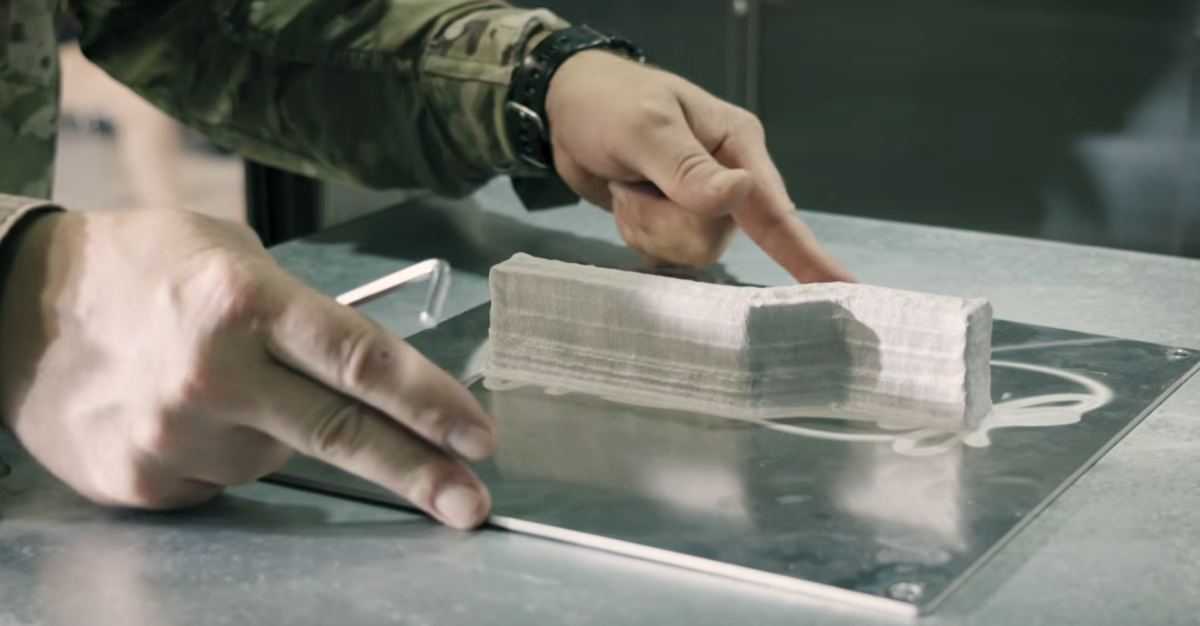
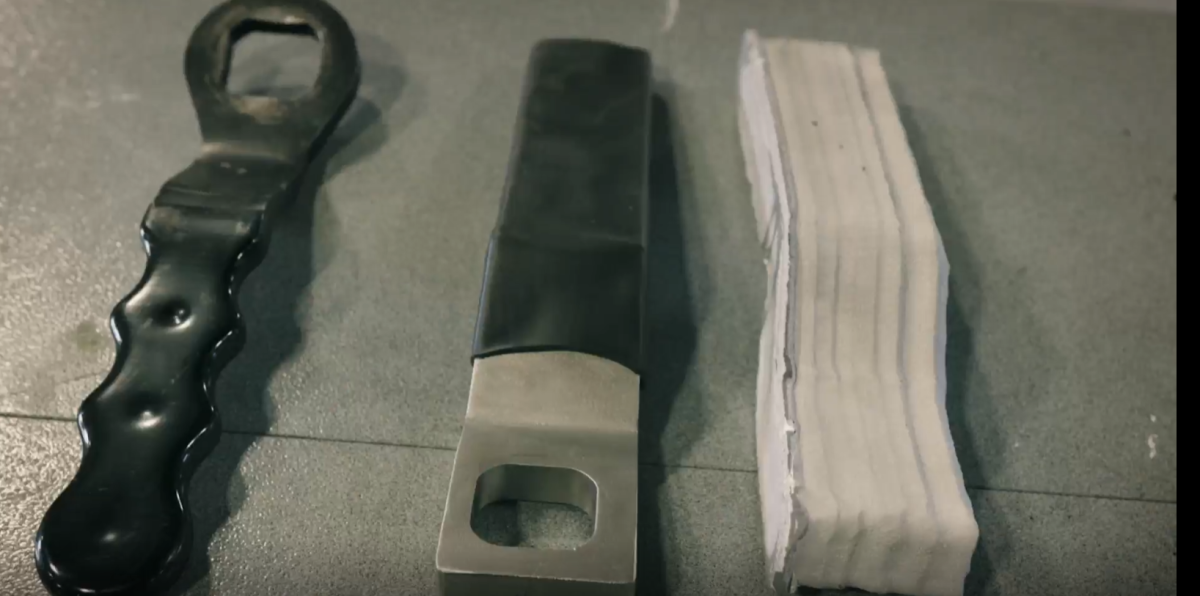
For the mission profile, the team added an additional operational constraint. Instead of moving the component by convoy through contested terrain, a drone transported the newly manufactured handle over remote, otherwise undrivable ground directly to the stranded vehicle and its crew. A logistics chain that would typically stretch over six weeks was compressed into a single-day mission, with the crew able to retrieve the part, complete the repair and drive the vehicle back to safety.
“Waiting weeks for a replacement part isn’t just a logistical delay, it’s a tactical vulnerability for the military. Our technology is there to empower soldiers with true right-to-repair capabilities at the point of need. This demonstration is an example of how our expeditionary manufacturing technology does not just fix vehicles but strengthens mission readiness and gets warfighters back in the fight safely and effectively.” – Byron Kennedy, SPEE3D CEO
The demonstration highlighted the broader “true cost” of a part in theatre. Beyond the invoice price, a single component can entail aircraft hours, helicopter missions, convoy planning, fuel, maintenance and manpower, as well as weeks of lost availability of critical combat power. By bringing metal production directly to the forward environment with our EMU, expeditionary manufacturing offers an alternative that can reduce both delay and exposure for personnel.
The exercise did not stop at a single Battle Lock Handle. Over the course of the trial, soldiers and researchers used our EMU to produce multiple components that directly affect survivability and readiness, including an exhaust cover for a generator powering MEDEVAC equipment and mounting brackets for a battlefield display used to prevent friendly-fire incidents. Traditionally, such failures might require ordering entire assemblies at significant cost. With our EMU, units can efficiently and cost effectively manufacture only the parts they actually need, on demand.
Beyond the immediate vehicle repair, the exercise delivered condensed, hands-on training for Tennessee Army National Guard soldiers. Participants with limited prior exposure to additive manufacturing were able to learn the workflow, operate our EMU and produce parts within the timeframe of the trial. Going forward, the University of Tennessee, Knoxville will utilise our XSPEE3D expeditionary metal 3D printer to train military operators in realistic scenarios, from remote field environments to rapid-response situations, helping future personnel develop the capability to independently produce critical parts at the point of need.
The university has also acquired one of our TitanSPEE3D metal 3D printers, enabling rapid production of large, custom metal parts that would traditionally require casting. Together, the TitanSPEE3D and XSPEE3D systems position UTK’s DARC to advance both research and production in cold spray metal additive manufacturing, supporting military requirements while expanding training and research opportunities for students.
In recognition of the project’s success, the University of Tennessee’s DARC, the Tennessee Army National Guard, and DEVCOM ARL were awarded the Expeditionary & Tactical 3D Printing Excellence Award during MILAM 2026, in Tampa, Florida. The award is presented to an individual or group in recognition of their profound contributions and diligent work in delivering innovative advanced manufacturing solutions to the tactical edge. The award is meant to drive continued efforts by industry and government to work towards supplying the Warfighter with enhanced additive manufacturing capabilities that will improve readiness and reduce the time it takes to attain a critical part at the point of need.
“We wanted to maximize the value-added of this unprecedented initiative with our soldiers and partnership with ARL, UT, and SPEE3D to grow our expertise in this field and then serve as a force multiplier to other Army units and organizations who are not as fortunate to have this capability in their own backyard. This allows our soldiers and maintenance leaders to help shape the Army’s future of maintaining our critical combat systems when we are deployed and in harm’s way. If we can give our Soldiers the ability to build critical repair parts in a timely manner that will help improve combat power, enhance readiness, and reduce risk and our logistics footprint that could ultimately help save Soldiers’ lives…” – Army Lt. Col. Colby Tippens, Executive Officer, 278th ACR
About University of Tennessee Knoxville
The University of Tennessee, Knoxville is the state’s flagship public research institution and a leading partner to government and industry in advanced manufacturing, defence research and engineering education. Through centres such as the Defense Development and Applied Research Center (DARC), UTK collaborates with federal agencies, defense industry, and other academia partners to develop, test and transition new technologies that strengthen national security and build workforce capability. https://www.utk.edu/
About SPEE3D
We are a leading metal additive manufacturing technology company dedicated to developing and delivering metal 3D printers utilising our patented Cold Spray Manufacturing (CSM) technology. Our solutions enable significantly faster production than traditional metal manufacturing for materials including copper, aluminium, stainless steel, and specialised alloys.